Cells rely on molecular machines to defend themselves against pathogens, organise their interiors, and adapt to their environment. We use cryogenic electron microscopy and tomography (cryo-EM/ET) to uncover the molecular architecture of these machines and understand how their structures, interactions, and dynamics give rise to biological function.
Our current research focuses on host–pathogen interactions and the molecular mechanisms underlying cellular immunity and membrane remodelling. We are particularly interested in how proteins assemble on, interact with, and remodel biological membranes, and how these processes contribute to host defence and pathogen survival. More broadly, we study large, self-assembling biomolecular complexes, including force-generating enzymes, protein-based compartments that control cellular buoyancy, and cytoskeletal assemblies that organise intracellular space. In each of these systems, molecular interactions drive the formation of large cellular structures with distinct functional properties.
Our lab aims to develop a quantitative mechanistic understanding of how these assemblies function in their native biological environment, grounded in the principles of chemistry and physics. We want to understand not only what these complexes look like, but how they work and why they work the way they do. By combining high-resolution structural insights from cryo-EM/ET with biophysical, biochemical, and cell biological approaches, we investigate how they assemble and operate within their biological context. An integral part of our research is the development of experimental and computational methods that extend the capabilities of cryo-EM/ET and enable us to investigate increasingly complex and heterogeneous molecular systems. A detailed molecular picture of these systems provides a basis for understanding their function and, potentially, for modifying or redesigning their properties.
02 October 2026
New preprint from Lennart on GBP nanobody probes 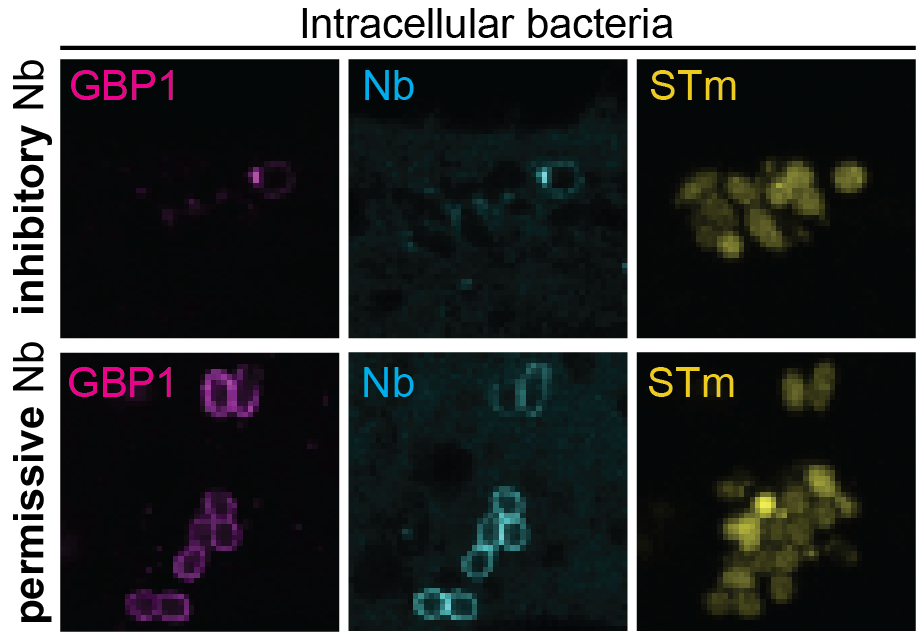
31 July 2026
Alok’s SURFER is on the cover of Acta D 
01 June 2026
Marten joins our lab as a postdoc. Welcome Marten! 
Kavli Institute of Nanoscience
Department of Bionanosciene
Delft University of Technology
Van der Maasweg 9, 2629 HZ Delft


